China has become a major source of equipment for high-reliability automotive PCB production. This guide introduces ten leading Chinese manufacturers of Pcb Automotive Machine systems. Their product ranges may include drilling machines, exposure units, solder mask equipment, laser machines, AOI systems, and automated handling lines.
Automotive PCB production demands more than speed. It requires stable positioning, repeatable process control, clean operation, and traceable quality data. A small alignment error can affect a vehicle control board. That detail matters.
The manufacturers discussed here are considered through practical indicators, including machine capability, engineering experience, export activity, after-sales support, and application coverage. Factory demonstrations, technical documentation, customer references, and certification records should support every serious evaluation. ISO 9001 or IATF 16949-related evidence may be useful, but buyers should verify current certificates directly.
No ranking is permanent. Market visibility changes, and some companies publish limited technical information. That creates uncertainty. A strong supplier may remain less visible online while serving demanding regional customers. Therefore, this overview should guide comparison rather than replace technical due diligence.
Attention will also be given to spindle accuracy, throughput, software integration, maintenance access, spare-part availability, and operator training. These details become clear beside a production line: a heated chamber, a calibrated camera, or a drill head running continuously. Cost matters, but downtime can cost more.
Readers should compare specifications against their own board designs, production volumes, material systems, and compliance requirements. The best Pcb Automotive Machine is not always the most expensive model. It is the one that performs consistently in the intended factory environment.
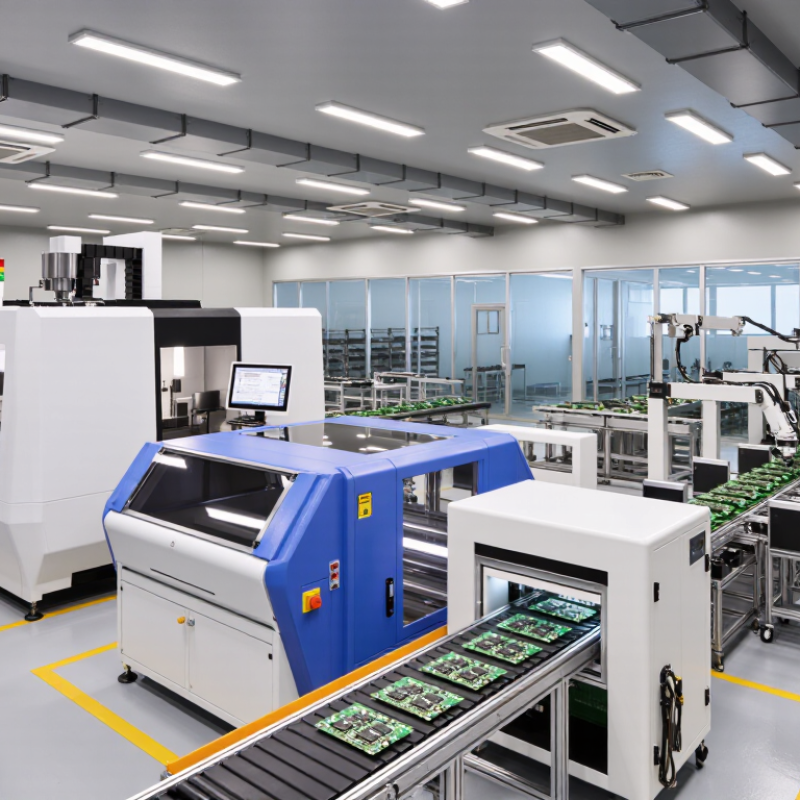
China’s PCB automotive machine manufacturing sector covers equipment for drilling, routing, laser processing, imaging, inspection, and surface treatment. These machines support boards used in battery management systems, engine control units, radar modules, lighting, and charging equipment. Production lines often combine high-speed spindles with automated loading systems. A typical machine may process multilayer panels while monitoring tool wear, hole quality, and temperature changes.
Manufacturers in China serve both domestic and international PCB factories. Their technical work usually involves motion control, machine vision, dust extraction, software integration, and traceable quality records. In automotive production, accuracy is not enough. Equipment must maintain stable performance across long shifts, because a small registration error can affect hundreds of boards. Inspection machines can detect open circuits, surface defects, and misplaced features before later assembly stages. This reduces waste and supports more consistent delivery.
The sector is capable, but not flawless. Some systems still need stronger software compatibility and clearer maintenance documentation. That matters when factories connect equipment from different suppliers. Engineers often test repeatability, vibration, cycle time, and service response before approving a machine. Practical trials reveal problems that brochures may hide. A clean factory floor does not guarantee reliable output. Operators still need training, spare parts, and disciplined calibration. For automotive PCB production, the most valuable equipment is not simply fast; it is measurable, repairable, and stable under real factory pressure.
| No. | Machine Category | Primary Manufacturing Scope | Typical PCB or Process Capability | Automotive Applications | Key Quality and Compliance Focus |
|---|---|---|---|---|---|
| 1 | CNC PCB Drilling Machines | High-speed mechanical drilling for through-holes, tooling holes, and selected microvia structures. | Suitable for multilayer rigid boards; common production configurations use small-diameter carbide drills and automated tool changing. | Engine control units, transmission controllers, body control modules, and power distribution boards. | Hole accuracy Registration, drill wear control, burr reduction, and process traceability. |
| 2 | Laser Drilling Machines | Laser formation of microvias and fine interconnect features in high-density interconnect boards. | Designed for small microvia diameters and sequential-build-up structures, subject to material stack-up and process qualification. | Advanced driver-assistance systems, camera modules, radar control units, and compact battery electronics. | HDI reliability Via consistency, resin condition, alignment, heat-affected-zone control, and electrical continuity. |
| 3 | PCB Exposure and Direct-Imaging Systems | Image transfer for inner layers, outer layers, solder mask, and fine-line circuit patterns. | Supports multilayer boards and fine-pitch designs; direct imaging reduces dependence on photographic tooling for many production formats. | Infotainment systems, instrument clusters, telematics units, and sensor interface boards. | Pattern accuracy Line-width control, layer-to-layer registration, exposure uniformity, and defect inspection. |
| 4 | PCB Etching and Developing Lines | Automated chemical developing, etching, stripping, rinsing, and solution management for circuit formation. | Used for standard and high-density circuit patterns on copper-clad laminates and multilayer outer layers. | Automotive lighting, motor-control boards, chassis electronics, and safety-related control modules. | Chemical control Copper removal uniformity, etchant concentration, line width, wastewater management, and repeatability. |
| 5 | Multilayer Lamination Presses | Heat and pressure bonding of copper foils, prepregs, cores, and sequential-build-up layers. | Configured for rigid multilayer, high-temperature, and selected metal-core board constructions; cycle settings depend on laminate chemistry. | Electric vehicle inverters, battery-management systems, onboard chargers, and power-conversion assemblies. | Stack-up integrity Resin flow, void prevention, thickness control, warp control, and thermal-cycle reliability. |
| 6 | PCB Plating and Surface-Finishing Lines | Electroless copper, electrolytic copper, solderable surface finishes, and selective plating processes. | Supports plated through-holes, via metallization, and finishes such as immersion gold, immersion tin, or organic solderability preservative. | High-current power boards, sensor modules, braking electronics, and under-hood control units. | Plating reliability Copper thickness, hole-wall coverage, adhesion, solderability, corrosion resistance, and bath chemistry. |
| 7 | PCB Routing, Profiling, and Depaneling Machines | Mechanical contour routing, V-grooving, edge finishing, and separation of individual boards from panels. | Used for rigid boards with defined outlines, slots, cutouts, connector openings, and panelized production formats. | Dashboard electronics, electronic control units, charging equipment, and vehicle connectivity modules. | Dimensional control Board outline accuracy, edge quality, dust extraction, tool-life monitoring, and low mechanical stress. |
| 8 | Automated Optical Inspection Systems | Camera-based inspection of copper patterns, solder mask, silkscreen, pads, vias, and surface defects. | Applied to inner-layer inspection, outer-layer inspection, solder-mask inspection, and post-process defect classification. | Safety electronics, airbag controllers, steering systems, driver-assistance modules, and battery electronics. | Defect detection False-call management, image resolution, inspection coverage, barcode tracking, and production data retention. |
| 9 | Electrical Test and Flying-Probe Systems | Open-short testing, net verification, insulation checks, and selected high-voltage or functional test procedures. | Flying-probe systems are useful for prototypes and low-volume changes; fixture-based testers are common for stable high-volume products. | Battery-monitoring boards, powertrain controllers, lighting modules, and safety-critical electronic assemblies. | Electrical safety Test coverage, contact repeatability, insulation resistance, test-program control, and calibration records. |
| 10 | Thermal, Environmental, and Reliability Test Equipment | Thermal cycling, humidity exposure, solder-joint evaluation, vibration-related screening, and accelerated reliability testing. | Used to evaluate rigid, flexible, and rigid-flex boards under temperature, humidity, electrical, and mechanical stress conditions. | Engine-compartment electronics, electric-vehicle battery systems, power electronics, and long-life vehicle control units. | Automotive qualification Thermal shock, humidity resistance, insulation stability, vibration durability, and documented test results. |
Common equipment includes drilling, routing, laser processing, imaging, solder mask, AOI, and electrical testing. Laser drilling supports microvias. High-speed routing protects delicate board edges.
Test an actual production panel before purchase. Measure hole position, edge quality, copper thickness, and panel warpage. Factory demonstrations can hide long-shift problems.
Request calibration records, software traceability, alarm history, and repeatable measurement data. Ask for failure-rate information from the past twelve months. Real data matters more than polished claims.
Check inspection repeatability for opens, shorts, and uneven solder coverage. Compare results across repeated panels. Small measurement changes can affect signal integrity.
Review ISO 9001 and IATF 16949 support. Ask for relevant IPC-based acceptance criteria and process capability studies. Documented corrective actions are useful evidence.
Measure cycle time during extended operation, not only during a short demonstration. Monitor tool wear, vibration, temperature, and dust control. Performance may decline after several shifts.
Check spare-part availability, training hours, and response times. Technicians should reach critical parts without dismantling most of the machine. Remote diagnostics and secure data export also help.
Include tooling, consumables, energy use, software updates, maintenance, and service delays. A low quotation can become expensive later. I once focused too heavily on advertised precision and missed software usability. That was a costly lesson.
China’s Pcb Automotive Machine manufacturing industry supports the growing demand for reliable, high-precision circuit boards used in electric vehicles, driver-assistance systems, battery management, lighting, and other automotive electronics. This overview explains the industry’s scope, major application areas, and the criteria used to compare leading manufacturers, including production capacity, engineering expertise, process stability, delivery performance, customization capability, and after-sales support.
The discussion also introduces the typical products and technologies offered by China’s top automotive PCB machine manufacturers, such as drilling, imaging, exposure, plating, inspection, cutting, and automated handling equipment. Key quality considerations include accuracy, repeatability, equipment durability, process control, safety, and compliance with internationally recognized manufacturing standards. For buyers evaluating suppliers, the article recommends reviewing technical specifications, sample results, factory capabilities, quality systems, service responsiveness, total ownership costs, and long-term cooperation potential before selecting a suitable Pcb Automotive Machine partner.

 Anyco Automation