China Top 10 LED Light Circuit Board Manufacturers

Time:2026-10-08 Author:Madeline
0%

China Top 10 LED Light Circuit Board Manufacturers

Choosing a reliable Led Light Circuit Board manufacturer requires more than comparing prices. Engineers must examine thermal performance, copper thickness, substrate quality, production controls, and testing evidence. A bright lamp can still fail when heat remains trapped near the LED.

Dr. Shuji Nakamura, a Nobel Prize-winning LED pioneer, has emphasized, “The most important thing is to make the LED more efficient.” His insight also applies to circuit design. An efficient board should move heat quickly, maintain stable current paths, and support consistent light output. Small details matter. A poorly placed via can raise operating temperatures. Weak solder joints may crack after repeated heating and cooling.

This introduction presents ten leading Chinese manufacturers connected with Led Light Circuit Board production. The comparison considers engineering capability, material selection, customization, quality management, delivery experience, and after-sales communication. It also considers practical evidence, such as thermal testing, sample consistency, factory audits, and traceable inspection records.

No ranking is perfect. Company capacity changes. Marketing claims can sound stronger than factory results. Buyers should request current samples and verify specifications independently. A manufacturer that serves high-volume lighting projects may not suit a small architectural order. Likewise, a low-cost board may create higher maintenance expenses later.

The best supplier is not always the largest. It is the one that understands your lamp housing, power conditions, installation environment, and service expectations. This guide helps readers ask sharper questions before making a purchase.
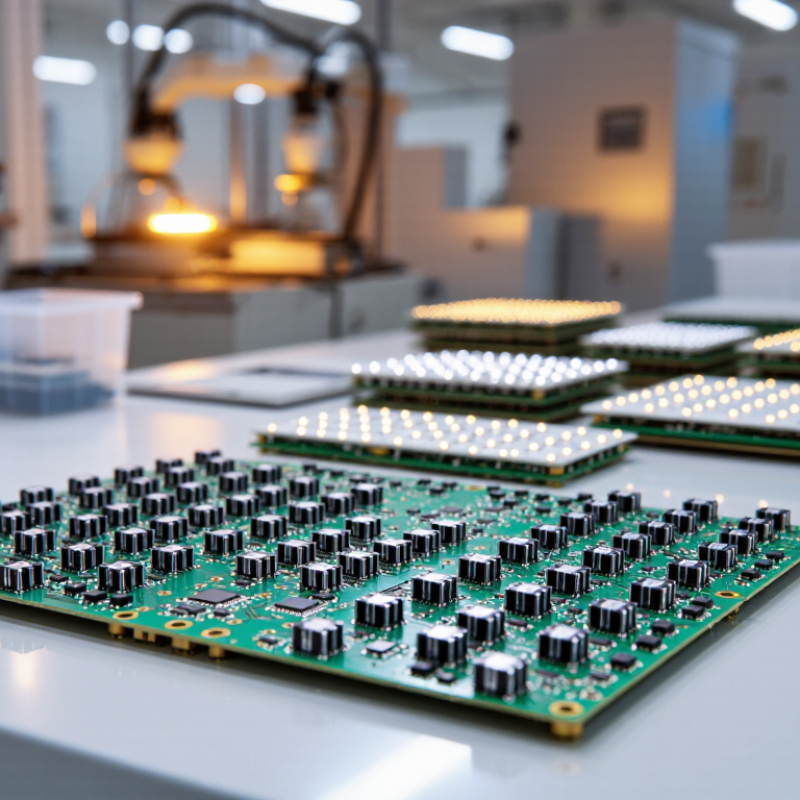
China Top 10 LED Light Circuit Board Manufacturers

What Are LED Light Circuit Boards and Why Do They Matter?

An LED light circuit board is the working platform behind an LED fixture. It carries electrical current, supports components, and helps control heat. A typical board includes copper traces, solder pads, resistors, connectors, and a protective solder mask. Some designs also use thermal vias to move heat toward an aluminum backing plate.

This small board matters because LED performance depends on more than the diode itself. Poor routing can create voltage drops, flickering, or uneven brightness. Weak heat transfer may shorten service life. During practical inspection, engineers often check trace width, copper thickness, insulation distance, and solder quality. They may also examine a powered sample with a thermal camera. Tiny hot spots can reveal a serious design weakness.

Material selection deserves attention. FR-4 boards suit many indoor products, while metal-core boards often support higher-power lighting. However, metal-core construction does not solve every thermal problem. The housing, airflow, and power supply still influence temperature. I have seen designs that looked efficient on paper but performed poorly after prolonged testing. That is an uncomfortable lesson. Specifications can hide assembly problems.

When comparing circuit board manufacturers, buyers should request test records, dimensional tolerances, thermal data, and component traceability. Clear documentation supports reliable purchasing decisions. Independent sampling is also wise. A polished sample may not represent every production batch. Good engineering requires evidence, not confident promises.

China Top 10 LED Light Circuit Board Manufacturers: Why LED PCBs Matter

Thermal management is a key performance factor in LED light circuit boards. The chart compares representative thermal-conductivity ranges of commonly used PCB substrate materials. Higher values generally indicate better heat-spreading capability, which can support longer LED life and more stable light output.

Values are representative industry ranges measured in W/m·K. Actual performance depends on material grade, dielectric thickness, copper thickness, board structure, thermal vias, and operating conditions.

How China’s LED Circuit Board Manufacturing Industry Has Evolved

China Top 10 LED Light Circuit Board Manufacturers

China’s LED circuit board industry has changed from volume production to application-driven engineering. Earlier factories focused on low-cost, single-sided boards. Today, many producers combine aluminum substrates, thermal vias, controlled solder masks, and automated optical inspection. These details matter when LED modules operate above 80°C for long periods.

The transition follows market pressure. The International Energy Agency reported that LEDs represented more than half of global lighting sales by 2022, accelerating demand for efficient and durable electronics. TrendForce’s 2024 LED Industry Demand and Supply Chain Analysis also identified automotive lighting, smart lighting, and display applications as major growth areas. Chinese board manufacturers responded with thinner thermal paths, tighter drilling tolerances, and traceability systems. The workshop floor looks different now.

Not every upgrade worked.

Some suppliers invested heavily in automation but overlooked thermal testing. Others reduced copper weight, then faced unstable brightness and early solder fatigue. That weakness remains important when comparing China’s top ten manufacturers. Reliable evaluation should include thermal resistance, dielectric strength, lot consistency, and testing records, not only unit price. IPC standards provide useful technical references, while customer audits verify whether production controls actually operate daily. The industry is more capable, but capability is uneven. Experience still separates a polished sample from a dependable production batch.

China’s Top 10 LED Light Circuit Board Manufacturers

China’s Top 10 LED Light Circuit Board Manufacturers deserve evaluation beyond production scale. A reliable shortlist should examine board quality, thermal design, trace precision, testing, and delivery consistency. Grand View Research estimated the global LED lighting market at USD 78.58 billion in 2023. It also forecasts continued growth through 2030. This demand increases pressure on Chinese manufacturers to improve efficiency and traceability.

Strong manufacturers usually support aluminum-core PCBs, high-temperature laminates, and automated optical inspection. These details matter inside slim bulbs, streetlights, and commercial panels. The U.S. Department of Energy reports that LED products use at least 75% less energy than incandescent lighting. However, poor heat dissipation can shorten service life. That is where factory experience becomes visible. A ranking may still be imperfect. Public data rarely compares every supplier under identical conditions.

Tips: Ask for thermal-resistance data, sample test reports, and production photos. Confirm IPC workmanship requirements before placing an order. Check solder-mask quality under bright inspection light. Also review delivery records, not only quoted prices. TrendForce and other market reports show strong competition in China’s LED supply chain. Therefore, buyers should verify capacity, certification scope, and quality-control records directly. A polished website is not enough.

China Top 10 LED Light Circuit Board Manufacturers - China’s Top 10 LED Light Circuit Board Manufacturers

Rank Manufacturer Identifier Primary LED PCB Type Common Substrate Typical Board Thickness Thermal Conductivity Range Typical LED Applications Relevant Quality Standards
1 Manufacturer A Metal-core PCB for high-power LED assemblies Aluminum core 1.0–2.0 mm 1.0–3.0 W/m·K Streetlights, floodlights, industrial luminaires IPC-6012, IPC-A-600, ISO 9001
2 Manufacturer B Single-sided aluminum LED circuit board Aluminum with thermally conductive dielectric 0.8–1.6 mm 1.0–2.2 W/m·K Downlights, panel lights, commercial bulbs IPC-6012, RoHS, REACH
3 Manufacturer C FR-4 LED control and driver PCB Flame-retardant glass-reinforced epoxy laminate 0.8–1.6 mm Approximately 0.3–0.5 W/m·K Smart lighting, emergency lighting, LED drivers IPC-6012, IPC-A-610, ISO 9001
4 Manufacturer D Flexible LED strip circuit board Polyimide film 0.10–0.30 mm Application-dependent Architectural strips, signage, decorative lighting IPC-6013, RoHS, REACH
5 Manufacturer E Double-sided aluminum-core PCB Aluminum metal core 1.0–2.5 mm 1.0–3.0 W/m·K Automotive lighting, high-output modules IPC-6012, IATF 16949, ISO 9001
6 Manufacturer F High-density interconnect LED control PCB FR-4 laminate 0.6–1.6 mm Approximately 0.3–0.5 W/m·K Connected luminaires, sensor lighting, control modules IPC-6012, IPC-2221, ISO 9001
7 Manufacturer G Copper-core PCB for thermal management Copper core 1.0–3.0 mm 2.0–8.0 W/m·K dielectric system High-power spotlights, projectors, specialty lighting IPC-6012, IPC-A-600, ISO 9001
8 Manufacturer H Rigid-flex LED assembly PCB FR-4 and polyimide combination 0.30–1.60 mm Application-dependent Compact luminaires, display lighting, specialty modules IPC-6013, IPC-2223, RoHS
9 Manufacturer I MCPCB for outdoor LED luminaires Aluminum alloy core 1.0–2.0 mm 1.0–2.2 W/m·K Outdoor lamps, tunnel lights, area lighting IPC-6012, IEC 60598 design support, ISO 9001
10 Manufacturer J Standard LED module and light-engine PCB Aluminum or FR-4, project-dependent 0.8–2.0 mm 0.3–3.0 W/m·K Bulbs, downlights, linear fixtures, decorative lamps IPC-6012, RoHS, REACH, ISO 9001

Note: Technical ranges are representative industry specifications and should be confirmed against each supplier’s latest datasheet, drawing, and compliance documentation.

Key Technologies and Production Capabilities of Leading Manufacturers

China’s leading LED light circuit board manufacturers compete through thermal control, precise assembly, and stable production systems. Many produce aluminum-backed MCPCBs for high-power lighting. These boards move heat from LEDs into the metal base quickly. Copper thickness, dielectric quality, and thermal-via design affect service life. Some factories also support FR-4 boards for low-power strips and control modules. The right material depends on current, temperature, and enclosure space.

Tips: Ask for cross-section reports, thermal resistance data, and recent batch records. Review solder-mask quality under bright inspection light. Check whether automated optical inspection follows every SMT line. Confirm aging tests, electrical testing, and traceable lot numbers. Small details matter.

Production capability is more than equipment quantity. Skilled engineers adjust solder profiles, placement accuracy, and copper etching controls. Modern lines may combine SPI, AOI, ICT, and sample-based functional testing. Clean workshops help reduce dust-related defects, especially around fine-pitch components. Reliable manufacturers usually provide process records and handle design-for-manufacturing feedback before mass production. Still, no process is flawless. A rushed inspection can miss weak solder joints or uneven thermal contact. Buyers should compare samples from different batches, not only polished prototypes. Factory audits, material verification, and clear tolerance agreements make performance claims easier to trust. Even experienced teams sometimes overlook connector stress during vibration testing. That oversight deserves attention.

How to Evaluate and Select a Suitable Chinese Manufacturer

China’s top 10 LED light circuit board manufacturers should not be judged by rankings alone. A suitable supplier must match your design, quality targets, and delivery expectations. Check whether the factory has experience with aluminum PCBs, high-temperature applications, or compact lighting assemblies.

Request recent samples, not only polished product photos. Inspect solder mask coverage, edge finishing, hole accuracy, and copper thickness. Ask for test records, material certificates, and traceability documents. Reliable manufacturers can explain their inspection process clearly. They should also provide thermal data for high-power LED boards. A factory visit or independent audit can reveal storage conditions, equipment age, and real production capacity. Online claims are useful, but physical evidence matters more.

Tips: Compare three suppliers using the same technical drawing. Confirm MOQ, tooling fees, lead time, packaging, and warranty terms in writing. Discuss design-for-manufacturing before mass production. Small changes in pad spacing or heat dissipation may reduce defects. Communication speed is another practical test. If answers remain vague, risk is already present. I once considered delivery speed too heavily and overlooked weak documentation. That mistake could have caused costly rework. A better evaluation also reviews corrective-action reports, sample consistency, and after-sales response. Price still matters, but the lowest quotation may hide thinner copper, weaker testing, or unstable process control.

FAQS

What is an LED light circuit board?

It carries current, supports components, and helps manage heat inside an LED fixture. Copper traces, solder pads, resistors, and connectors are common parts. Small board. Big responsibility.

Why does the circuit board affect LED performance?

Poor routing can cause voltage drops, flickering, or uneven brightness. Weak heat transfer can shorten service life. A bright sample may still hide problems.

Which board material suits LED lighting?

FR-4 often suits indoor, lower-power products. Metal-core boards usually support higher-power lighting. The housing, airflow, and power supply still affect temperature. Material alone cannot solve everything.

What should engineers inspect during testing?

They may check trace width, copper thickness, insulation distance, and solder quality. Thermal cameras can reveal tiny hot spots. Those spots may indicate serious design weakness.

What production technologies support reliable circuit boards?

Automated optical inspection, solder-paste inspection, electrical testing, and functional testing can reduce defects. Precise solder profiles also matter. Equipment helps, but rushed inspection can still miss weak joints.

How can buyers evaluate a circuit board manufacturer?

Request recent samples, test records, material certificates, thermal data, and traceable lot numbers. Compare samples from different production batches. One polished prototype proves very little.

What documents should buyers request before production?

Ask for dimensional tolerances, cross-section reports, copper thickness, thermal resistance data, and inspection records. Confirm lead time, tooling fees, packaging, and warranty terms in writing. Clear paperwork prevents later confusion.

Should buyers visit the factory or conduct an audit?

A visit can reveal storage conditions, equipment age, cleanliness, and real production capacity. Independent audits add useful evidence. Online claims sound convenient, but physical evidence matters more.

Is the lowest quotation the best choice?

Not always. A low price may hide thinner copper, weaker testing, or unstable process control. I once valued delivery speed too heavily. That judgment needed more reflection.

Conclusion

This article provides a practical overview of the Led Light Circuit Board industry in China, explaining how these boards support LED lamps by connecting components, managing electrical flow, improving heat dissipation, and enhancing product reliability. It also traces the development of China’s manufacturing sector, from basic board production to more advanced capabilities involving automated assembly, high-density layouts, improved thermal materials, and stricter quality management.

The article presents a structured look at ten leading categories of Chinese manufacturers without focusing on brand names, highlighting their production scale, customization services, testing processes, and technical strengths. It also explains how to evaluate a suitable supplier by considering material quality, design and engineering support, manufacturing capacity, certifications, quality control, delivery performance, communication, and total cost. These factors can help buyers make informed decisions and build stable, long-term cooperation with a capable manufacturing partner.


Madeline

Madeline

Madeline is a dedicated marketing professional with a wealth of expertise in our company's core offerings. With a keen understanding of the industry, she brings a unique perspective to her role, consistently delivering high-quality content that highlights the superior aspects of our products. As......