Automotive Electrical Components rarely attract attention until something stops working. Yet a corroded ground strap, weak battery connection, or damaged sensor wire can affect starting, lighting, charging, and engine management. These parts carry power and information through a vehicle, helping separate systems work together. Small parts. Big consequences.
Their importance grows as vehicles add electronic controls, driver-assistance features, and electric powertrains. A connector must maintain contact despite vibration and temperature changes. A fuse must interrupt excessive current. A sensor must send accurate information, not merely appear intact. These details matter during diagnosis, too: replacing a component without checking its wiring can miss the real fault. That explanation is useful, but incomplete; software, installation, and maintenance also influence reliability.
Automotive pioneer Robert Bosch is often quoted as saying, “I would rather lose money than trust.” Although this is a principle about integrity, it offers a fitting lens for electrical design: dependable performance rests on trust in each connection and component. This article explores why these parts matter, how they support everyday vehicle functions, and what can happen when they fail. The aim is practical understanding, not the claim that every fault has one simple cause.
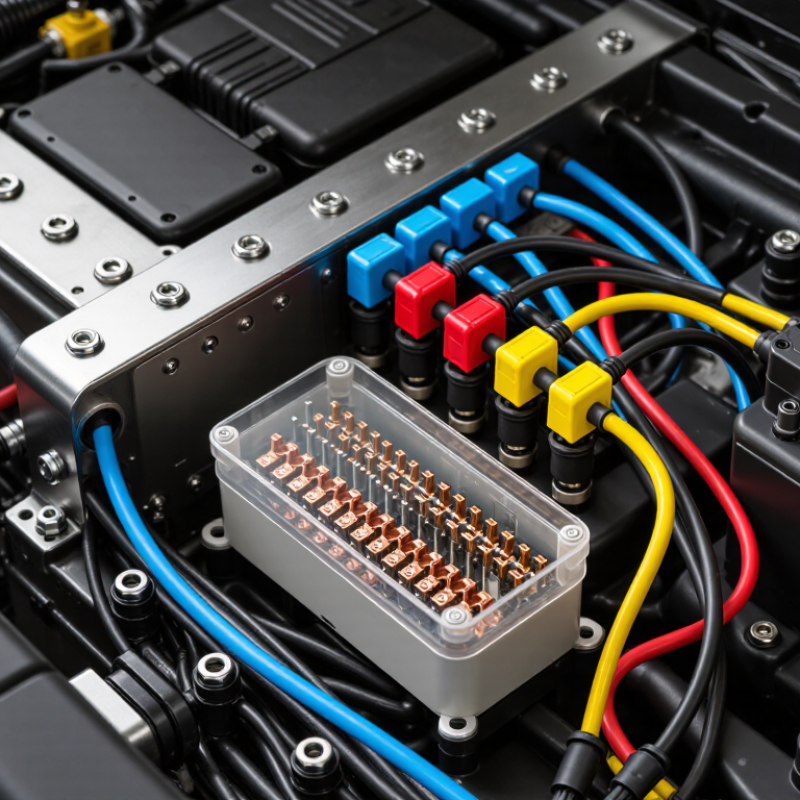
Automotive electrical components are the parts that generate, store, distribute, and use electrical energy in a vehicle. They include the battery, alternator, wiring harnesses, connectors, fuses, and relays. The battery supplies power when the engine is off and helps start it. Once running, the alternator replenishes the battery and supports electrical loads. Simple jobs, but essential ones.
Other components turn electrical signals into information or action. Sensors measure conditions such as wheel speed, engine temperature, and air pressure. Control units interpret those readings and send commands to actuators, including fuel injectors, cooling fans, and door locks. Lamps, dashboard displays, starter motors, and heating controls are also part of the wider electrical system. A corroded connector can interrupt a signal, even when the sensor itself is working.
The exact boundaries can be a little unclear. Some parts, such as control units, combine electrical hardware with software, while high-voltage vehicles use additional power electronics. In practical terms, these components work as connected circuits: wires carry current, fuses help limit damage from excessive current, and grounds complete the path. A dim headlamp may point to a weak battery, a poor connection, or another fault. One symptom rarely tells the whole story.
Electrical components distribute and control power for vehicle functions, from lighting and control systems to hybrid and electric propulsion.
Typical voltage classes are shown for context: 12 V systems power many conventional vehicle accessories, 48 V systems are used in some mild hybrids, and around 400 V or 800 V are common electric-vehicle traction-system classes. Actual voltages vary by vehicle design and operating conditions.
Automotive electrical components work as a network, not as isolated parts. Wheel-speed sensors measure rotation, control units interpret their signals, and actuators respond by adjusting braking or power delivery. A fault in one link can affect the others. Sometimes the problem is simply a corroded connector.
The International Energy Agency’s Global EV Outlook 2024 reported nearly 14 million electric car sales in 2023, around 18% of global car sales. In an electric vehicle, the battery, inverter, motor, sensors, and thermal controls must coordinate closely. The battery supplies energy; the inverter manages its delivery to the motor. Meanwhile, control software monitors temperatures and power demand. It is a busy conversation, and not every handoff is perfect.
Safety systems show this teamwork clearly. When forward sensors detect a possible collision, a control unit assesses the risk and may command the brakes. An Insurance Institute for Highway Safety study published in 2019 found that front crash prevention with automatic braking reduced rear-end crashes by about 50%. The components matter together. A poorly calibrated sensor or weak electrical connection can compromise the response, so maintenance and diagnostics deserve attention alongside the visible mechanical parts.
| Component | Main electrical role | How it works with other components | Typical detail | Why it matters |
|---|---|---|---|---|
| 12-volt battery | Stores electrical energy and supplies power when the engine is off or starting. | Provides high current to the starter and stabilizes the vehicle’s low-voltage electrical supply. | A fully charged lead-acid battery is typically about 12.6 V at rest; actual readings depend on battery type, temperature, and condition. | A weak battery can prevent starting and cause electrical systems to operate unreliably. |
| Starter motor and solenoid | Turns the engine during startup. | The ignition or start control signals the solenoid, which connects battery power to the starter motor. | Starter current is high and can reach hundreds of amperes, depending on the engine and conditions. | Reliable starting depends on the battery, cables, connections, control circuit, and starter working together. |
| Alternator and voltage regulator | Generates electrical power while the engine runs and helps recharge the battery. | Supplies power to vehicle loads through the electrical system; the regulator controls charging output. | Many conventional charging systems operate around 13.5–14.8 V, although managed charging systems may vary the voltage. | It supports electrical loads and helps maintain battery charge during vehicle operation. |
| Fuses and relays | Fuses protect circuits from excessive current; relays let a low-current control circuit switch a higher-current load. | They connect power sources and control signals to components such as fans, lamps, and pumps. | Fuse ratings are selected for the circuit and wiring; a fuse opens when excessive current flows for sufficient time. | Correct protection can limit wiring damage and reduce the risk of electrical overheating. |
| Sensors | Measure conditions such as temperature, pressure, speed, or position and provide electrical signals. | Send information to electronic control units, which use it to make control decisions. | Depending on sensor type, the output may be a changing voltage, resistance, frequency, or digital signal. | Accurate sensor signals help control systems respond to changing engine and vehicle conditions. |
| Electronic control unit (ECU) | Processes inputs and controls outputs according to programmed logic. | Uses sensor data and network messages to command actuators, such as fuel injectors, ignition coils, or cooling fans. | Vehicle networks commonly carry digital messages between control units; CAN is one widely used in-vehicle network protocol. | Coordinated electronic control supports engine operation, safety functions, comfort, and diagnostics. |
| Wiring harness and ground connections | Carry power and signals between the battery, control units, sensors, and electrical loads. | Complete the circuit by providing power paths and return paths, often through designated chassis or engine grounds. | Wire gauge, insulation, connectors, and routing are chosen for current, temperature, vibration, and environmental exposure. | Damaged wiring or poor connections can cause voltage drops, intermittent faults, or loss of component operation. |
| Electrical loads: lamps, fans, and pumps | Convert electrical energy into light, motion, or fluid movement. | Receive power through protected circuits and may be switched by a relay or commanded by a control unit. | Each load draws current according to its design and operating state; combined demand must be supported by the charging system. | These components provide essential functions, from visibility and cooling to fuel delivery. |
Automotive electrical components support far more than the dashboard. The battery and starter help turn the engine over, while the alternator replenishes electrical power as the vehicle runs. Engine sensors send readings to control modules, which adjust fuel delivery and ignition timing. Headlights, brake lamps, and turn signals also depend on reliable wiring and connections. Small parts matter.
Safety and comfort systems rely on electricity, too. Anti-lock braking systems use wheel-speed sensors to help manage braking, and airbags depend on sensors and control units to respond during a collision. Electric power steering, climate controls, window motors, and infotainment systems draw power through different circuits. A weak connection can cause odd symptoms, such as a flickering cabin light or an intermittent warning message. Not every fault is electrical, though. Guessing can lead to wasted repairs.
Tips: If a warning light appears, note when it happens and whether other systems act strangely. Check the owner’s manual before inspecting fuses, and avoid probing wiring without the correct tools. A battery test alone may not identify a loose ground or failing alternator. Diagnosis takes patience; the first suspected part is not always the cause.
Electrical components help a vehicle respond predictably when conditions change. A stable power supply supports headlights, brake lights, anti-lock braking systems, airbags, and driver alerts. If a connector is loose or a wire is damaged, a warning light may appear—or a safety feature may not work as intended. Small faults matter. Moisture around a connection can also cause corrosion, leading to intermittent problems that are harder to diagnose than a complete failure.
Electrical health affects performance, too. The battery supplies power for starting, while the charging system replenishes it as the engine runs. Sensors send information to control systems, helping manage engine operation and fuel use. Dim lights, slow cranking, or accessories that behave inconsistently can be clues, though they do not identify one definite cause. It is easy to blame the battery too quickly. A careful check of connections, fuses, and charging output can prevent guesswork; complex faults are best assessed by a qualified technician.
Tips: Watch for recurring warning lights, flickering lamps, or unusual starting delays. Keep battery terminals clean and secure, and avoid pulling on wiring during checks. Record when a symptom occurs; that detail can help narrow down the cause.
Automotive electrical reliability depends on more than a healthy battery. Wiring, grounds, fuses, sensors, and charging components all affect how consistently a vehicle starts and operates. Small signs matter. A dim headlight, slow engine crank, or flickering dashboard display can point to a loose connection or weakening battery. These symptoms are easy to dismiss, especially when they appear only on cold mornings.
During routine service, inspect battery terminals for white or greenish corrosion, and check that clamps feel secure. Corrosion spreads quietly. Clean terminals carefully using suitable tools, and follow the vehicle maker’s guidance. Look for cracked insulation, pinched wires, or dampness near connectors, particularly after heavy rain or an engine-bay wash. A visual check helps, but it cannot identify every fault. A clean battery terminal is reassuring, yet it does not prove the charging system is healthy. Periodic battery and alternator testing can catch problems earlier.
Pay attention to warning lights and changes in electrical behavior. Record when an issue occurs; intermittent faults may appear only with headlights, heating, or other loads switched on. That detail can help a technician diagnose the cause without replacing parts unnecessarily. Modern vehicles may also contain high-voltage systems, which require qualified service. I have learned that routine checks reduce surprises, but they do not guarantee trouble-free operation. Even well-maintained connections can fail with age or vibration.
Starting, charging, engine controls, lights, brakes, airbags, steering, windows, climate controls, and infotainment use electrical components. Small parts matter.
Damaged wires or loose connectors may affect headlights, brake lamps, alerts, or safety systems. A warning light deserves attention.
Watch for dim headlights, slow cranking, flickering cabin lights, or recurring warning messages. These clues do not identify one cause.
No. A loose ground, corroded terminal, or failing alternator can also cause trouble. Guessing can waste repairs.
Look for corrosion on battery terminals, loose clamps, cracked wire insulation, pinched wires, and damp connectors. Be careful.
No. Intermittent problems may appear only with headlights or heating switched on. A clean terminal proves little about charging health.
Record when it happens and which systems are active. Cold mornings or heavy rain may reveal useful patterns.
No. High-voltage systems require qualified service. The first suspected part may still be wrong. Diagnosis takes patience.
Automotive Electrical Components are the parts that generate, store, distribute, and control electrical power throughout a vehicle. These include the battery, alternator, wiring, sensors, switches, control units, and lighting. They work together by supplying energy and sharing signals, allowing different systems to respond to driver inputs and changing conditions.
Many essential vehicle functions depend on these components, from starting the engine and illuminating the road to operating dashboard displays, climate controls, and driver-assistance features. Reliable electrical systems support safe, consistent performance by helping critical equipment function as intended. Regular maintenance can help preserve that reliability: checking the battery, inspecting wiring and connections, and addressing warning signs early may reduce unexpected faults. Understanding how electrical components interact makes it easier to recognize their importance to a vehicle’s everyday operation, safety, and performance.
Anyco Automation