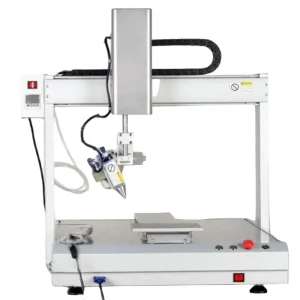
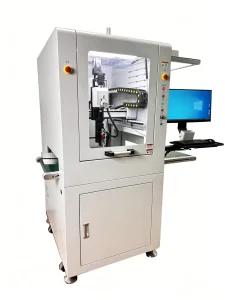
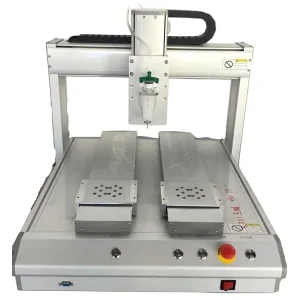
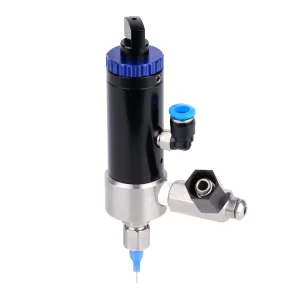
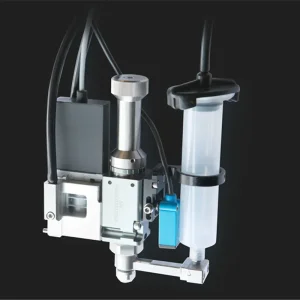
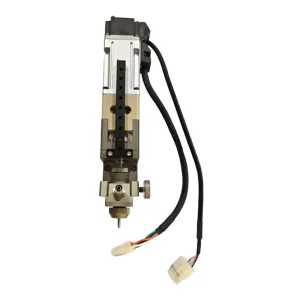
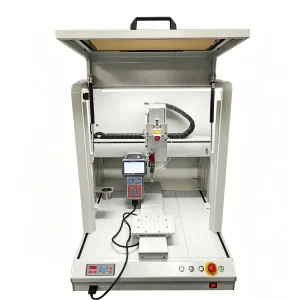
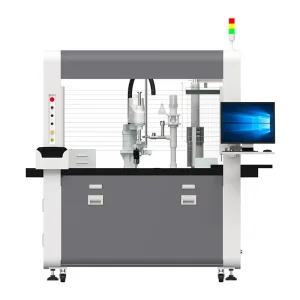
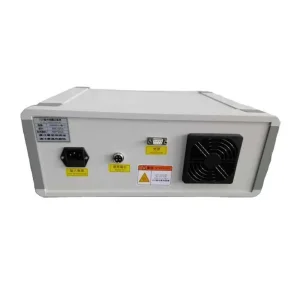
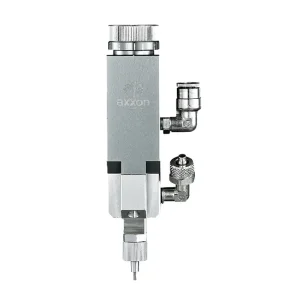
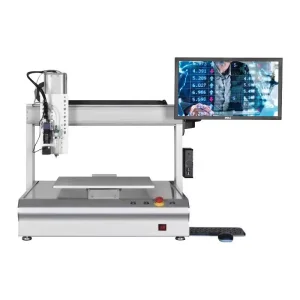
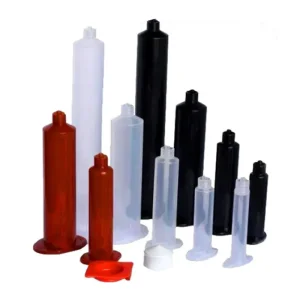
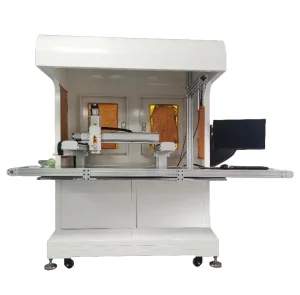
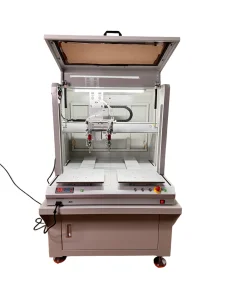
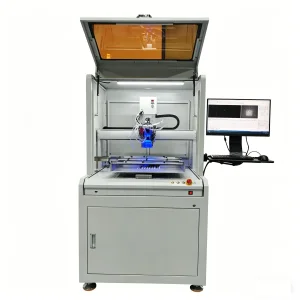
High-precision systems engineered to apply high thermal conductivity paste without voiding or wear.
As electronic components continue to shrink in physical dimensions while increasing in power density, managing heat flux has transitioned from a routine design task to a critical engineering limitation. High Thermal Conductivity Paste (commonly referred to as Thermal Interface Material or TIM) is the foundational element that bridges heat-generating silicon dies to heat sinks. However, applying these highly viscous, filler-heavy pastes consistently requires specialized OEM/ODM dispensing equipment. Shenzhen Anyco Automation Equipment Co., Ltd. delivers the ultimate hardware integration to resolve thermal management bottlenecks.
Founded in 2013, Anyco has established itself as a leading national high-tech enterprise. Our core focus centers on the research, development, production, and after-sales support of automated fluid control systems. Our headquarters in Guanlan, Shenzhen, coupled with our state-of-the-art production facility in Huizhou covering an area of over 2,000 square meters, positions us to serve as a one-stop customized partner for global manufacturing clients.

The global demand for high thermal conductivity paste and precision fluid application systems is scaling at an unprecedented rate. Key technological vectors driving this growth include the mass adoption of electric vehicles (EVs), AI-centric data centers, and advanced telecommunication infrastructures (5G/6G). Each of these fields requires rapid, precise application of high-viscosity pastes without trapping micro-air bubbles, which can cause hot spots and early chip failure.
Next-generation GPUs and TPUs exceeding 500W TDP require high thermal conductivity TIM paste. Our precision dispensing systems provide consistent Bond Line Thickness (BLT) control down to 20 microns, reducing thermal contact resistance dramatically.
For battery management units (BMU) and inverter assemblies, high thermal paste volume and high-speed dispensing are critical. Anyco's low-volume screw valves and automation systems ensure zero fluid shearing during transport.
5G Base Stations deploy large array RF transistors that require highly customized thermal interface layouts. Our vision-guided systems (e.g. SXR-300EDV) compensate for sub-millimeter component tolerances on the fly.

High thermal conductivity pastes differ widely in formulation—from silicone-based matrices filled with alumina, to non-silicone synthetics loaded with aluminum nitride or zinc oxide. Standard valves fail quickly due to the abrasive nature of these ceramic particles. Anyco addresses this challenge by engineering customized fluid dispensing valves and automated systems tailored to the exact chemistry of the material.
Our goal is simple: deliver high-speed, high-precision intelligent manufacturing solutions that ensure reliable bond-line thickness (BLT), prevent paste pump-out, and maintain consistent viscosity control during long shift operations.
To accomplish this, we utilize proprietary technologies and core intellectual property. Our systems serve global industries, including home appliances, consumer electronics, and automotive electronics. The reliability and flexibility of Anyco's dispensing valves and machines allow us to scale with customer demand.
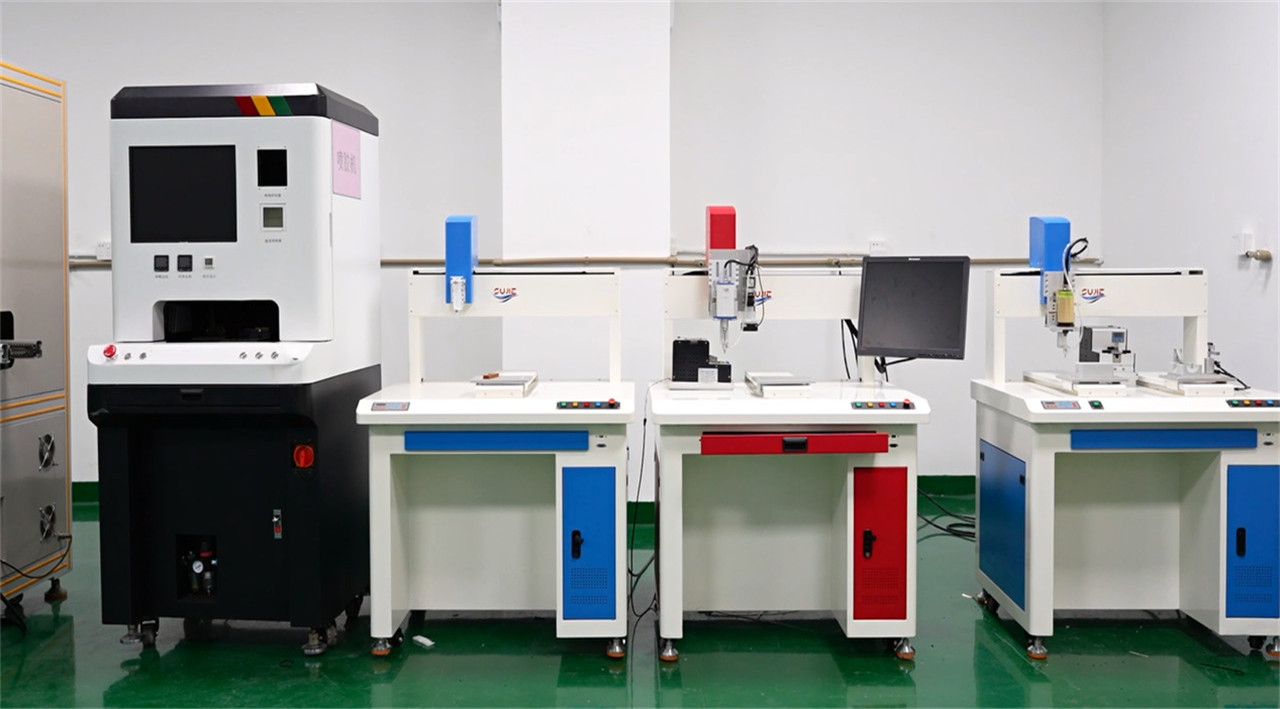
Take a look inside our specialized manufacturing facilities located in Shenzhen and Huizhou.
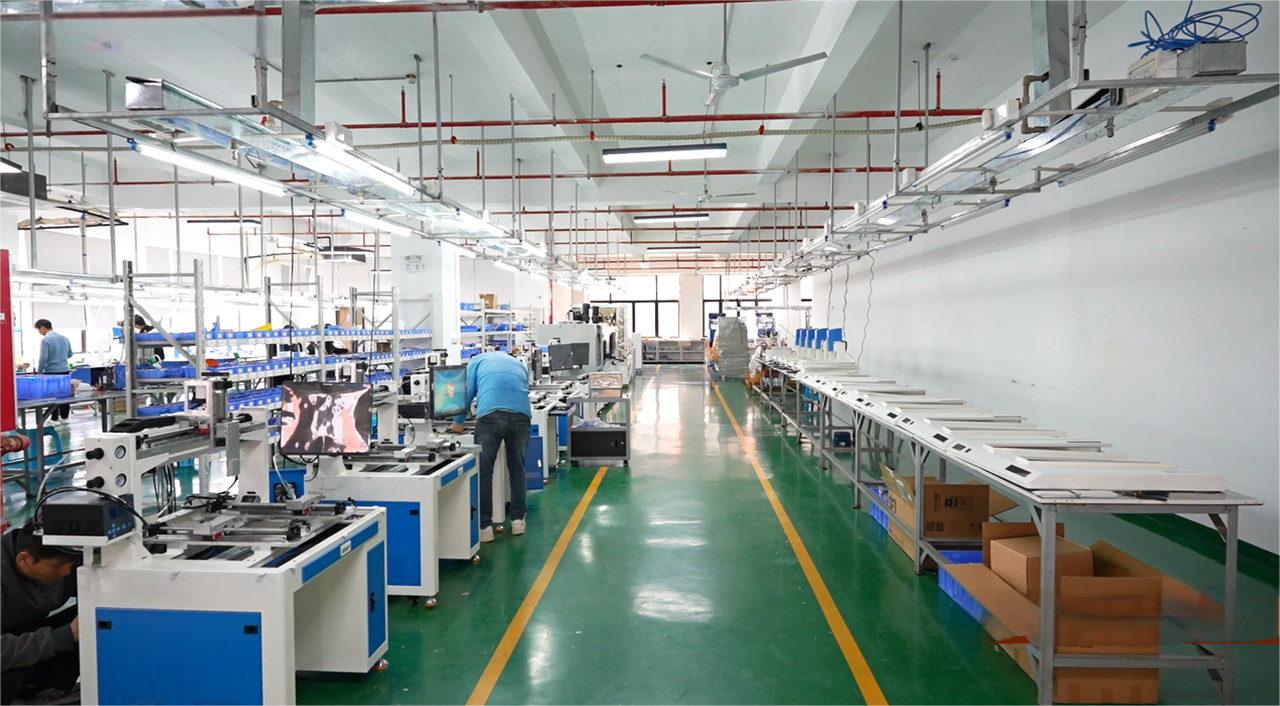
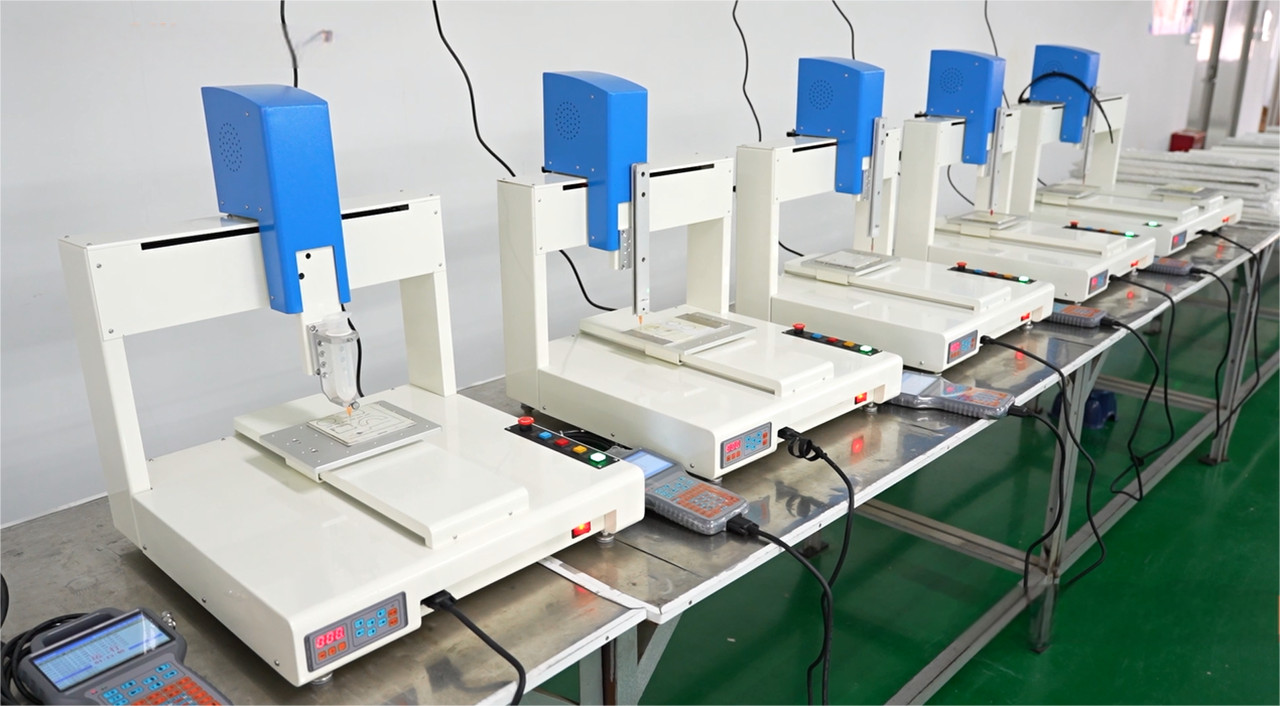
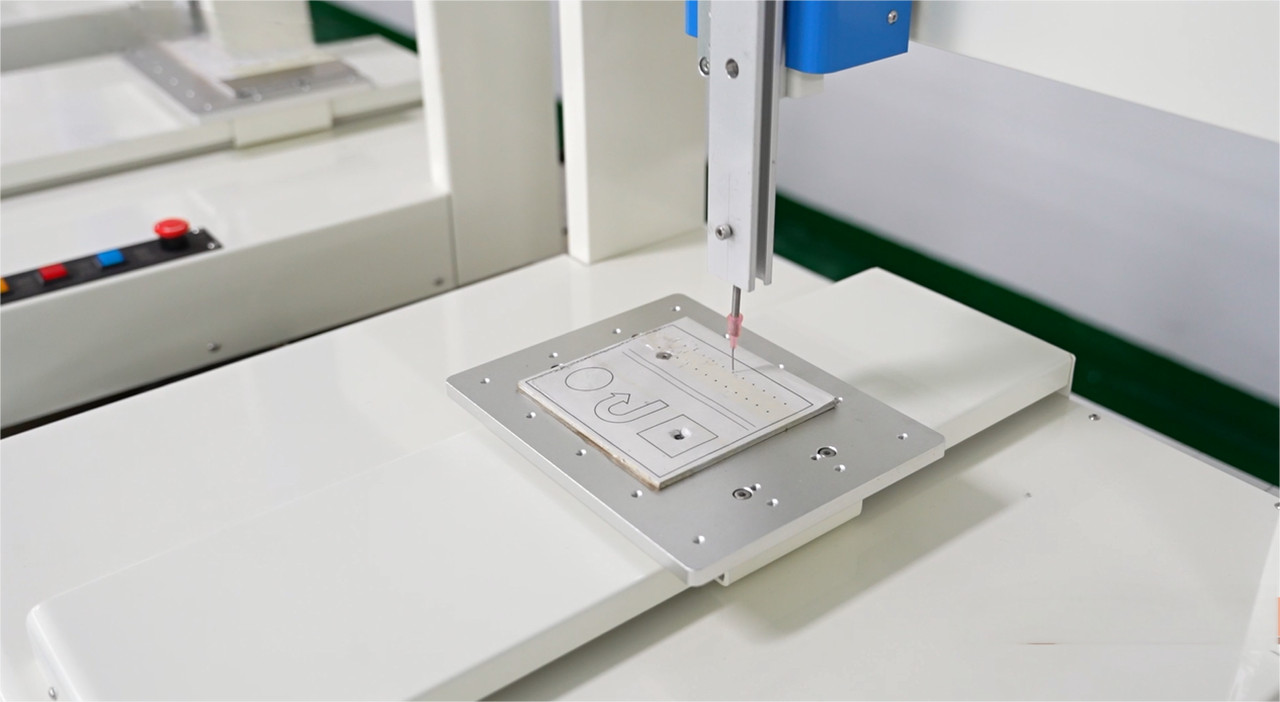
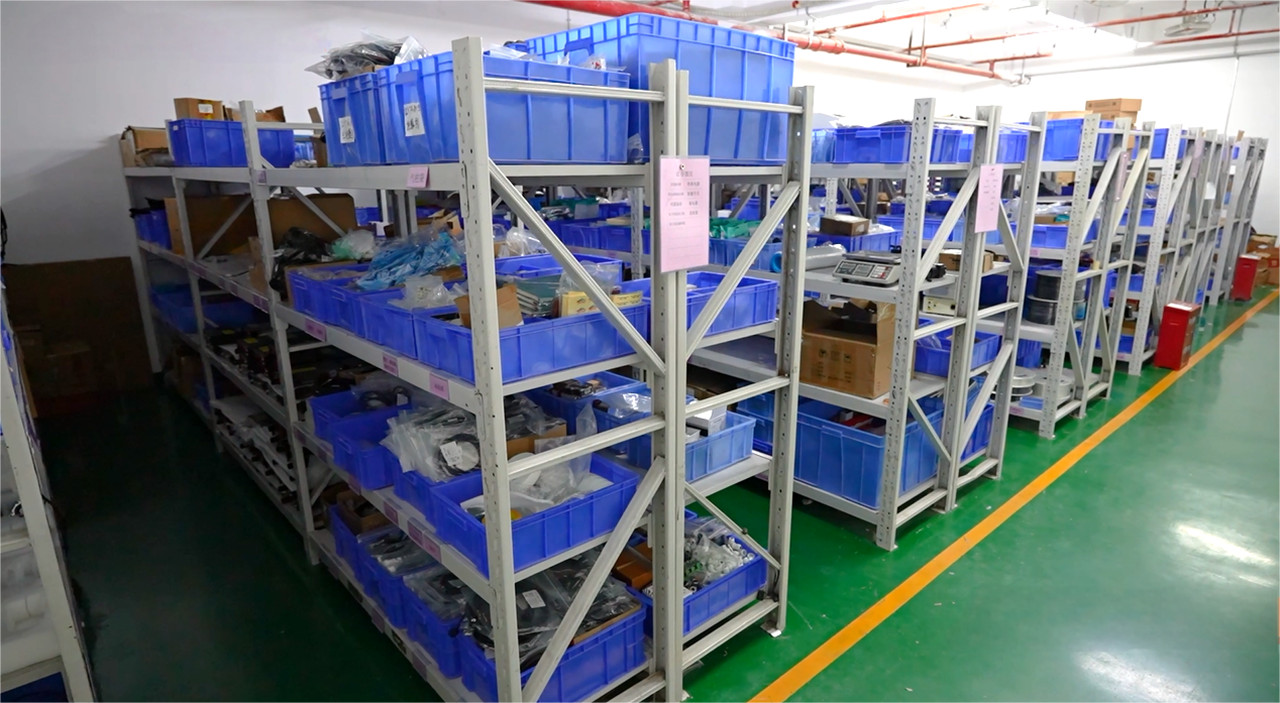
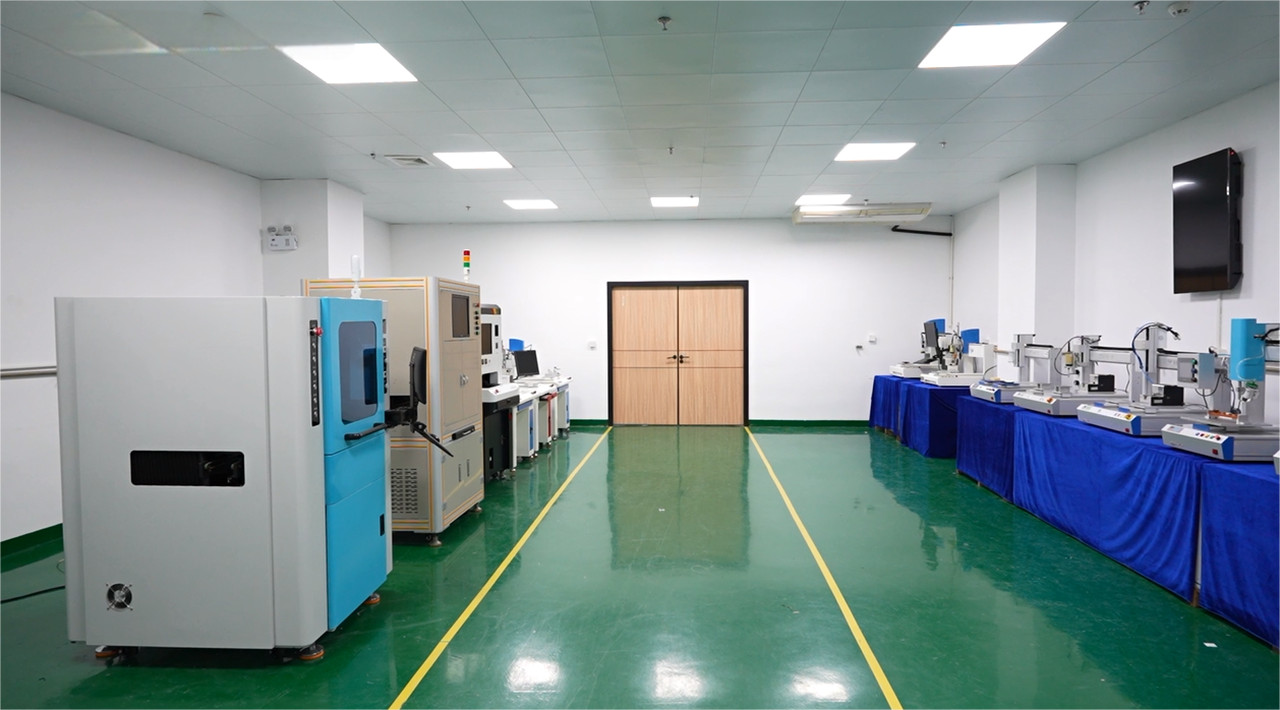
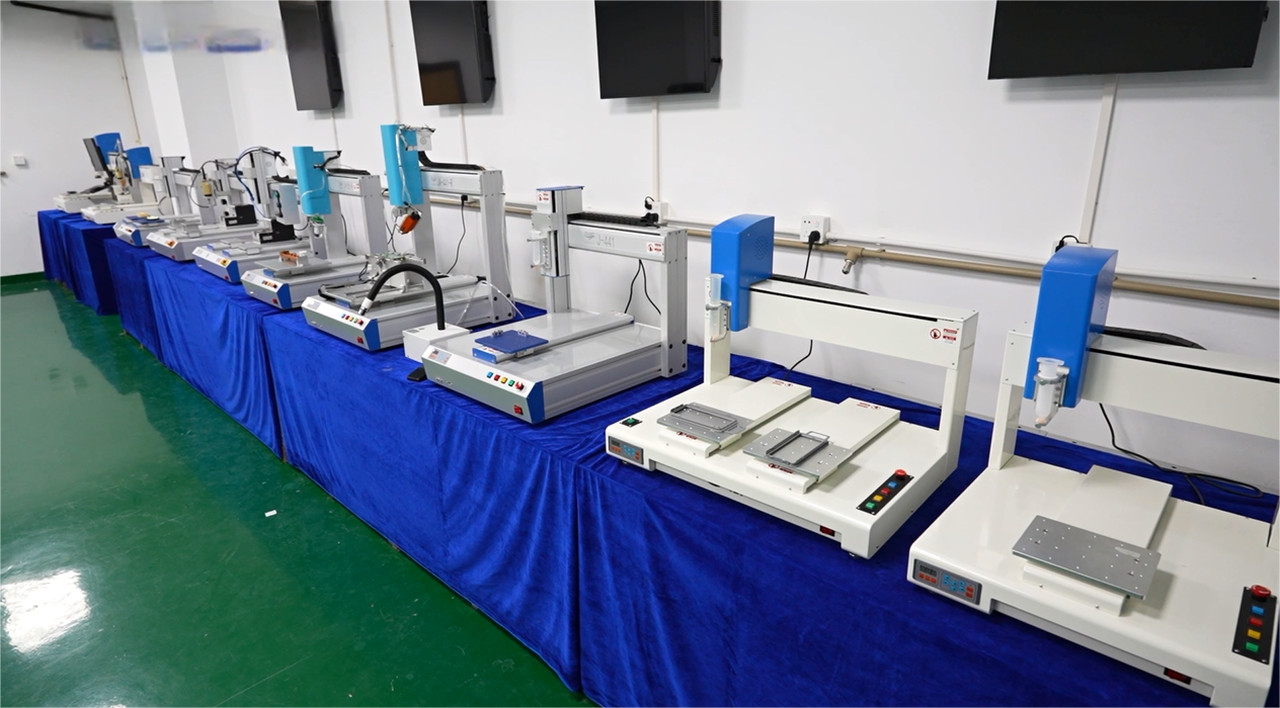
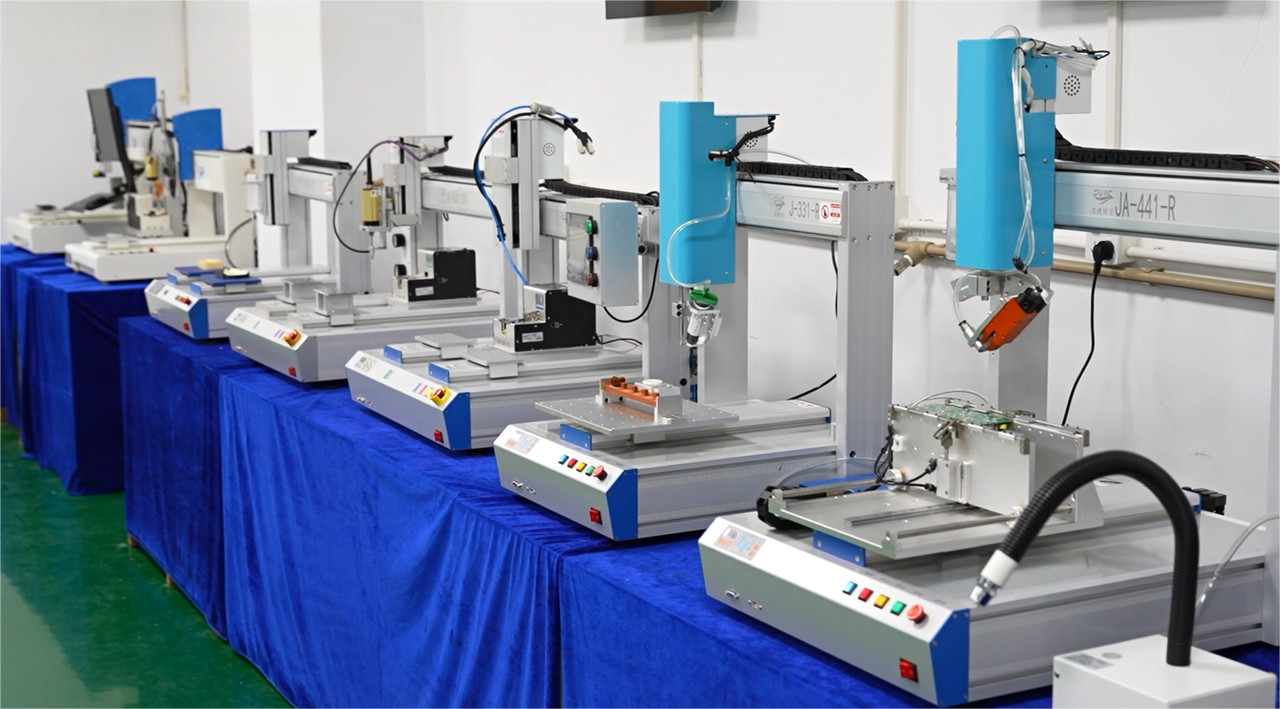
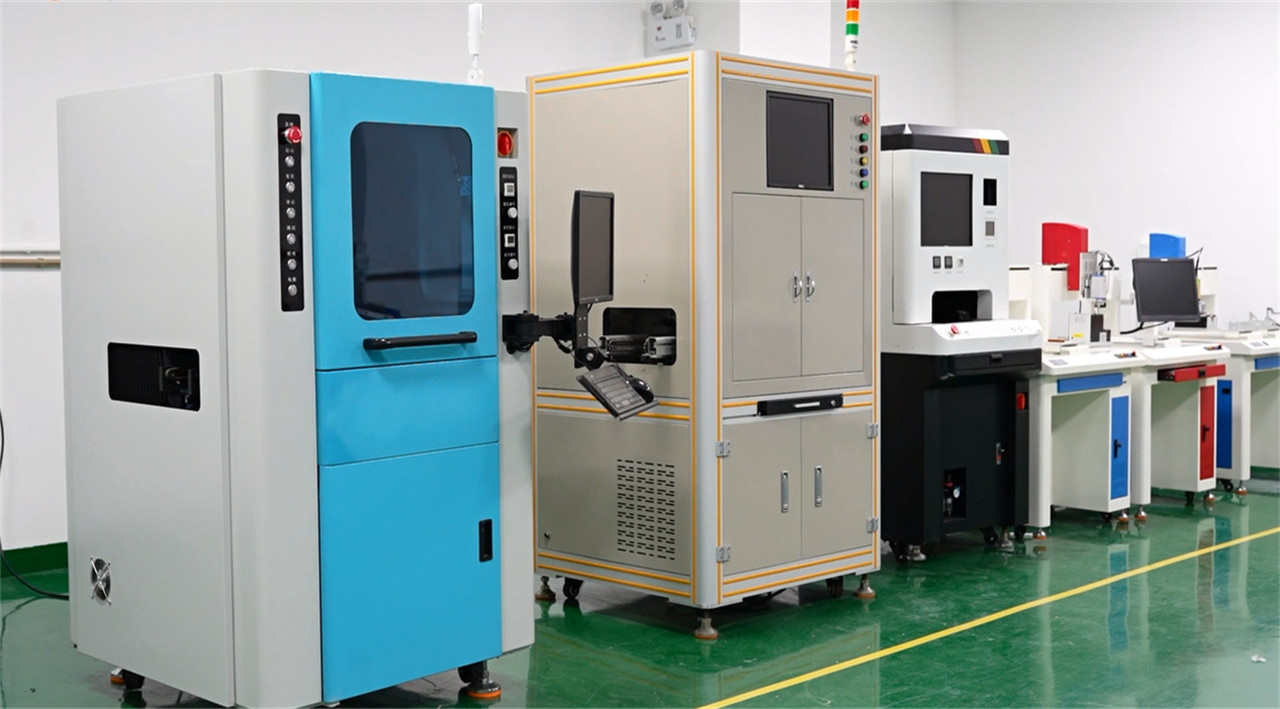
Different high thermal conductivity materials demand distinct physics for fluid control. For high-volume applications, a screw-style progressive cavity valve is preferred; for micro-assemblies, a non-contact jetting or impingement needle valve is ideal. Below is our comparative breakdown showing how to select the right valve architecture for your paste applications.
| Valve Architecture | Primary Application Profile | Wear Resistance Rating | Recommended Flow Capacity |
|---|---|---|---|
| AG-700 Screw Valve | Medium-to-high viscosity pastes (filled with silver or aluminum). Ideal for high thermal interface volume. | Excellent (Hardened steel alloys) | 0.05 ml/sec to 1.5 ml/sec |
| V6500 Pneumatic Jetting Valve | Non-contact injection dispensing on planar and non-planar substrates. | High (Tungsten carbide needle/seat) | 0.01 ml/dot to 0.1 ml/dot |
| AC-741GM Micro Needle Valve | High-speed diaphragm-based needle control for ultra-precise micro-lines. | Medium-High | 0.005 ml/stroke to 0.05 ml/stroke |
| V-420A Micro Needle Valve | High-speed application of lower-viscosity silicon-based heat-conductive fluids. | Standard (Stainless steel) | 0.01 ml/sec to 0.5 ml/sec |
We actively export our dispensing equipment to multiple key regions, establishing localized partner networks to ensure seamless support:
With a strong market presence in Vietnam, Thailand, and Indonesia, Anyco supports global EMS (Electronic Manufacturing Services) hubs. Our localized technician networks provide next-day parts replacement and commissioning.
For the rapidly expanding smartphone and home appliance sectors in India, Anyco supplies high-precision dispensing equipment tailored to meet local voltage, safety, and manufacturing specifications.
Serving automotive manufacturing clusters in Mexico and hardware manufacturers in Morocco, our CE-certified machines conform to strict electrical, safety, and operational standards.
All Anyco automated machines, such as the AC-M30, SXR-300EDY, and AC-T761-2, come with CE Certification. We design our equipment to comply with international manufacturing guidelines, emphasizing low energy consumption, low acoustic footprints, and easy integration into modern smart manufacturing executions systems (MES).
As electronic packages transition to system-in-package (SiP) structures and Co-packaged Optics (CPO), thermal dissipation challenges will grow more complex. Anyco is developing new dispensing technology to meet these demands:
Answers to common engineering challenges encountered when dispensing highly conductive pastes.
We use specialized materials in the contact zones of our valves. For instance, the screw assembly in our AG-700 screw valve is constructed from hardened steel alloys, and our jetting valves feature tungsten carbide seats. These materials resist the scoring action of ceramic and metallic micro-particles in high thermal conductivity pastes.
Voiding is often caused by micro-air pockets trapped during paste application or component attachment. We recommend a cross or star-shaped dispensing path rather than a perimeter box pattern. Our dual-platform SXR-300EDY and vision-guided SXR-300EDV dispensing machines allow programming of complex geometries to let air escape during chip compression.
Silicone-based pastes can experience oil separation under high pressure. This separation requires low-shear dispensing, such as that provided by progressive cavity screw pumps. For non-silicone, high-viscosity pastes, pneumatic jetting valves (like the V6500) provide the momentum necessary to break off the fluid cleanly at the nozzle.
Yes, our inline follow-up robot dispensing equipment (like the CE Certified AC-M30 and online follow-up three-axis dispensing equipment) features standardized industrial communication protocols. These systems integrate with conveyor configurations and communicate with Manufacturing Execution Systems (MES) to track product flow and parameters.
Complete line of automated desktop systems, inline robots, and application valves.
 Anyco Automation